
Regional administrator
Defines network, reporting, applications, funding and public outputs.
KISSoS · social-care network management
Providers, services, capacity, reporting, applications, funding, maps and a public catalogue share one data foundation.
For regions, cities, social-affairs departments and providers.
See the process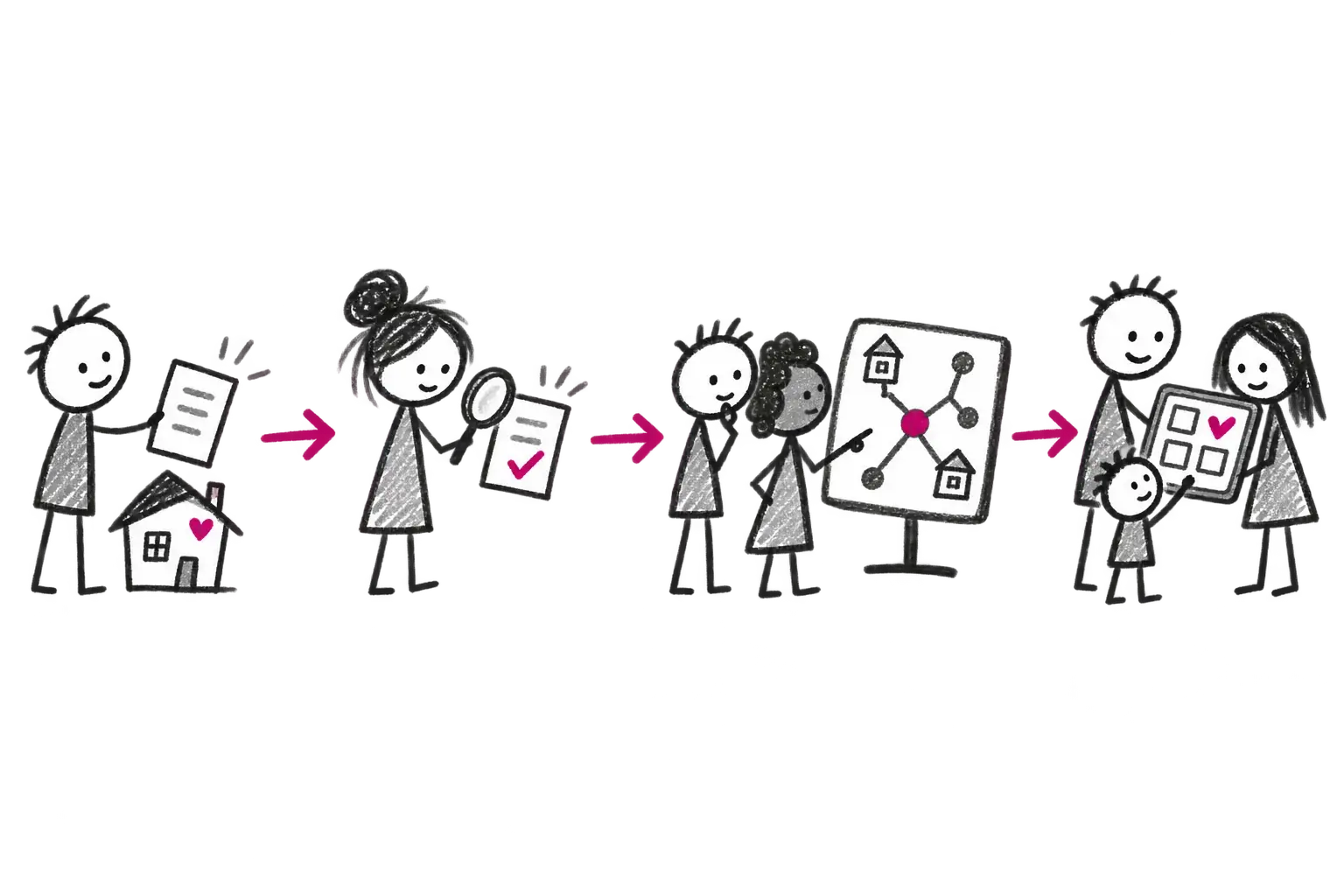
From start to finish
The region maintains a shared foundation of providers, services, capacity and key data.
A regional officer prepares data collection, an application or funding process with dates and rules.
The provider completes its submission and is warned about missing or invalid data.
The regional role decides, leadership sees the picture and network changes remain in history.
The public sees only approved information in the catalogue and availability map.
Who is involved
Defines network, reporting, applications, funding and public outputs.
Maintains service and submits validated data.
Use reporting and the public catalogue.
Who sees what
Providers work with their submissions, regional staff with validation and decisions, and leadership with authorised reporting. The public catalogue receives only approved catalogue data—not private submissions, comments or decision material.
Audit and privacy
Access and changes must be traceable. The data controller confirms retention periods and processors for each deployment.
Security by design →What happens when something goes wrong
Validation returns a specific issue and history preserves the change.
The result
Shared service, capacity, cost, application and decision data plus a public catalogue.
Product and integrations
The product provides ready-made building blocks. Roles, forms and rules are configured for your organisation. For every connector, we agree the system of record and the error path in advance.
Explore the product: Social care →Related solutions
Next step
We will take one real case, including the complications that commonly arise. We will explain clearly what the product does out of the box and what needs configuration or integration.
Find the right solution